Tuesday, March 10, 2015

Singapore

Singapore marks its 50th birthday this year.  So does Tony.  What better excuse for a  trip than to combine the two celebrations?

A group of islands at the southern tip of the Malay peninsula that became an independent country in 1965, Singapore has grown into one of the biggest urban centers in Asia.  It has a deep history with Indonesia and Malaysia, and was part of the British empire.  There have been significant immigrations from China and India, and it even has four national languages including English.  Talk about a melting pot!

A 3 hour flight from Manila, we spent 4 days and 3 nights there wandering the city.   It has a beautiful skyline and is clean, well organized, with great public transit, has lots of parks and green space, and the drivers followed the rules and didn't try to run me down in the cross walks.  A bit dull compared to Manila, perhaps, but it worked for me!

We stayed in the Orchard Road area, a shoppers mecca, but centrally located and easy to get around.  The hotel was in a new high-rise building with a great rooftop pool and outdoor area including a panoramic view of the entire city.

We used the subway a lot and found it really easy to navigate.  We also played tourist using the hop on / hop off bus that makes its way around town.  We saw a lot more of the city that way.  I loved the colors and character of Chinatown and Little India, and the new Marina Bay Sands development is quite an architectural wonder.  The Botanic Gardens and Orchid Garden were also quite amazing.

Singapore is well known for its food, and we weren't disappointed.  The street food vendors, locally known as hawkers, are especially well known and we sampled lots of food from them.  Crab is a local specialty, and Tony got his fill with two crab dinners.

It was a great celebration!

For more Singapore photos, CLICK HERE.

Wednesday, February 18, 2015

Palawan

Palawan is the largest province in the Philippines and comprises more than 1,000 islands on the west side of the country far out into the West Philippine Sea.  It's been the source of a lot of travel media attention lately and is often named as one of the best island destinations worldwide.  We used Stephen and Owen's visit from San Francisco as an excuse to check out those claims.


We first flew from Manila to the provincial capital, Puerto Princesa, in order to visit the famed underground river.  Located about 2 hours north by van, this world heritage site includes a river running through about 5 miles of limestone caves.  A well organized tour of the first half mile or so is available to the public.

I wasn't expecting too much, but was thoroughly impressed.  The tour was extremely well organized and the tour guide knew his stuff.  Once the van got to the national park, we transferred to a boat for a half hour ride to the site of the underground river where we boarded yet another boat for the actual underground river tour.  The scenery everywhere was amazing.  The cave and underground river itself were especially awesome.  The entire day was well worth the visit.

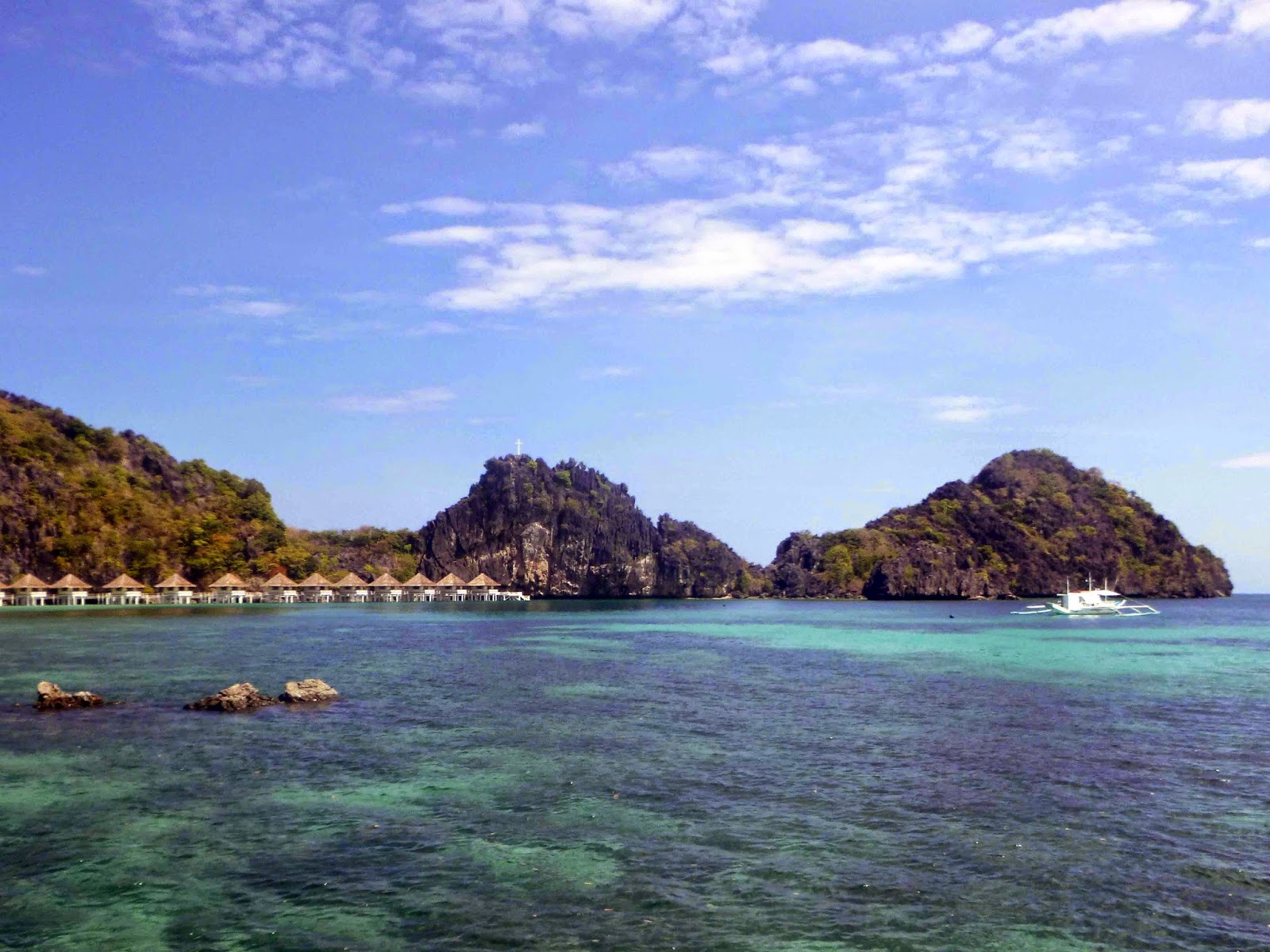
The main purpose of our Palawan visit, though, was a stay in El Nido.  Famed for its limestone islands, protected ecosystem and water activities, we splurged for a stay at the El Nido Resorts island of Apulit.

To get there, we traveled from Puerto Princesa by van for 4 hours north to the town of Taytay and then transferred to a boat for the one hour ride out to Apulit Island.  The scenery along the way was beautiful, and once we realized what the resort looked like as we neared it, our jaws dropped.  Upon arrival, we were met by the resort staff singing welcome songs.  They gathered us for a quick orientation and then showed us to our cottages.  Somehow, our luggage was already there, even though not all of our bags had name tags.  I'm still mystified how they did that.
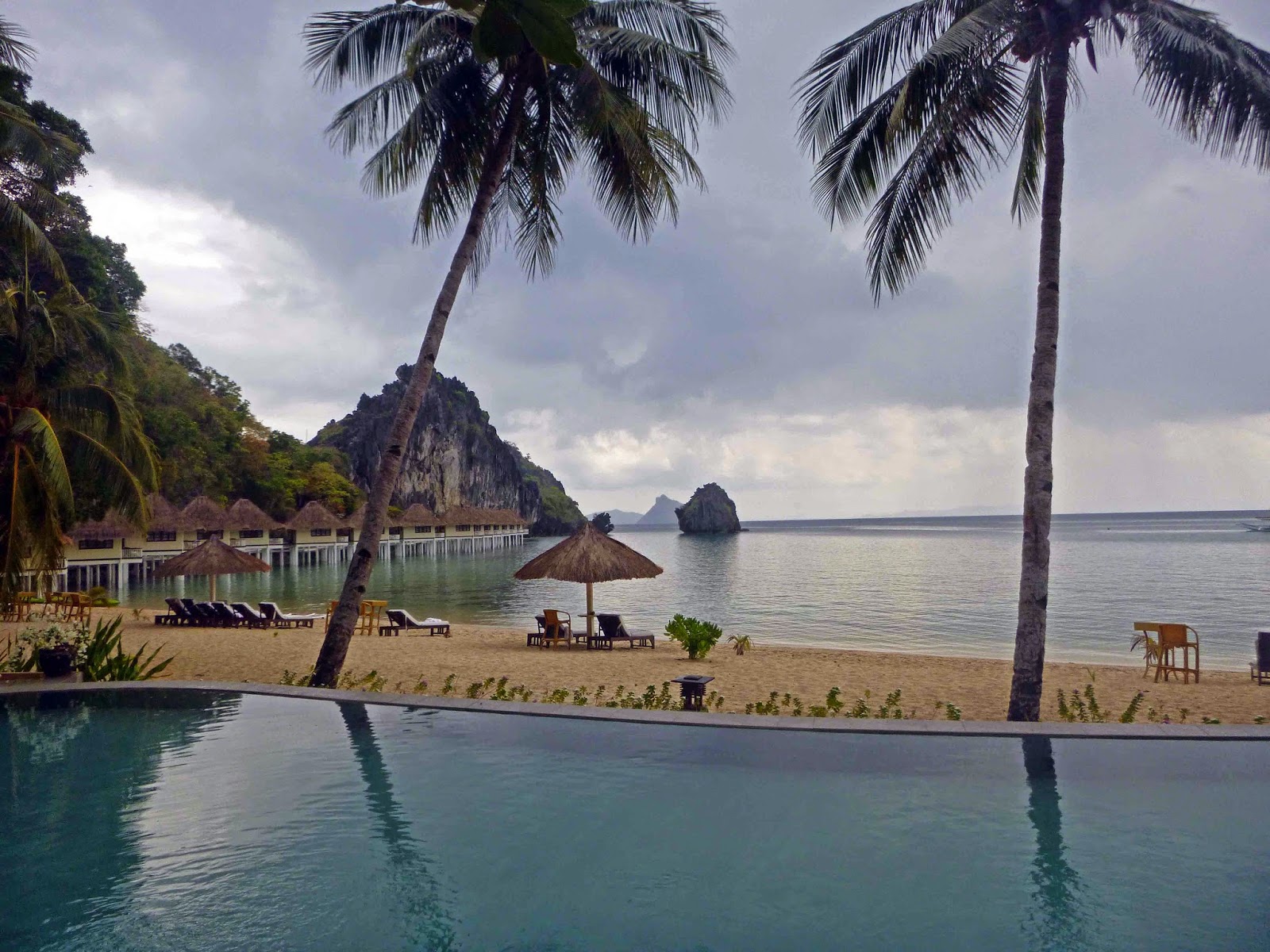
Apulit is a small island, and the resort is the only development on it.  There are 50 cottages that sit over the water together with a pool and club house area.  We had one of the larger cottages, and those had a private stairway to the water below.  The entire waterfront was full of coral and sea life, and we could watch colorful fish from the cottage deck.  It was stunning.

El Nido Resorts is known for its customer service, and they did not disappoint!  I've never been anywhere more friendly and welcoming.  All food was provided with large buffet meals that were excellent.  Virtually all of our activities were also included.  They provided us with complete snorkeling equipment for the length of our stay.  Kayaks and paddle boards were available.  Even a half day island hopping boat tour was included.  Owen and I "mastered" the paddle board, and all of us kayaked.

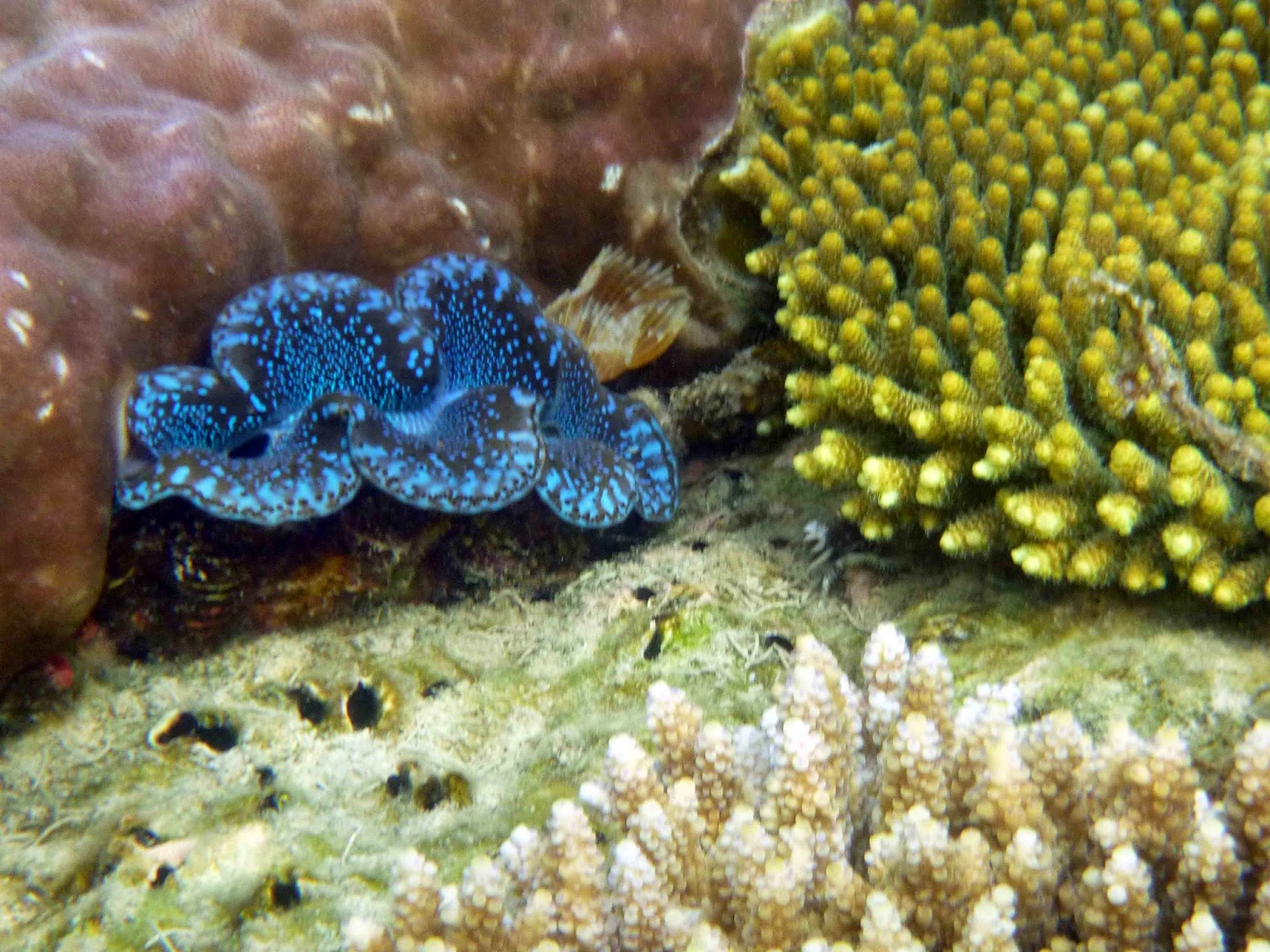
Snorkeling on the island is spectacular and among the best anywhere in the world.  The water is very clear, and colorful coral and fish are everywhere.  We floated for hours every day marveling at the wildlife.  It seemed especially difficult convincing Tony to get out of the water!


Every day seemed better than the last.  On our final full day, Stephen and Owen arranged for a special lunch.  The resort had two helpers bring the food and setup to a hut on a private beach where they cooked a wonderful meal.  We snorkeled, then gorged on a special Filipino menu, and then snorkeled some more.  It was a perfect day!

We took a direct flight back to Manila from the El Nido airport, still a one hour boat and two hour van ride away.  The airport security and check in area was an outdoor area about the size of someone's living room and had a view of the beach and ocean.  The boarding passes for the 50 seat propeller plane were small engraved wood plaques.  It wasn't your typical plane trip.

The entire Palawan island vacation was a really spectacular adventure with great company, and we all can't wait to go back!

For more Palawan photos, CLICK HERE.

Saturday, December 13, 2014

Corregidor

The Philippines and US have a rich shared World War II history.  No where is this more visible than Corregidor, site of a recent day trip.

A small island sitting at the mouth of Manila Bay, Corregidor has served as a defense to the city of Manila for centuries.  In December 1941 and early 1942, US and Philippine forces were pushed back to the nearby province of Bataan and Corregidor Island in their last stand against Japanese attack.  It was from Corregidor that MacArthur escaped to Australia making his famous statement, "I shall return".

There are well organized tours of Corregidor daily.  Leaving from Manila bay harbor, it takes about an hour to reach the island by boat.  Once there, you ride open trolley buses for a guided tour of the entire island.  Much of the history has been well preserved, and the guide was very knowledgable.  Many of the old gun emplacements remain, and there are dozens of old structures from the war.


Probably the most interesting for me was the Malinta tunnel.  A complex of tunnels built in the 1920's into a hill on the island for arms storage, they became the headquarters for MacArthur and the Philippine government for several months during the Japanese siege.  Philippine president Quezon was inaugurated here.    If you've ever watched the movie "MacArthur", the tunnels were featured prominently.

Corregidor has a fascinating past, especially related to WWII and the Philippine / US partnership.  It was an excellent visit and a great history lesson.


For more Corregidor photos, CLICK HERE


Sunday, November 30, 2014

The Intramuros and Fort Santiago


The Intramuros (latin for "within the walls") is the heart and soul of historic Manila.  The old walled city of Manila was built starting in the 1500's by the Spanish to protect their colonial settlement from invaders.  Only the Spanish and a few of those very well connected with them lived inside these walls during more than 300 years of colonial rule.

The Philippines hasn't done a great job at preserving it's history (in my opinion), but the Intramuros is an exception.  In spite of the fact that much of the Manila, including the Intramuros, was leveled during WWII, most of the original wall and many buildings inside remain and have been restored and preserved.  You can see great examples of Spanish colonial architecture in a number of buildings.

 
Tony's grandmother lived in the heart of The Intramuros in the late 1800's and early 1900's.  Being Filipina, it's not clear how she was able to live in an area typically reserved for the Spanish elite.  There is wild family speculation that her father may have been the illegitimate child of a Spanish priest enabling them to live inside the walls, but no one really knows.

Two significant churches remain including the Manila Cathedral (where the pope will say mass in January) and the San Agustin church, oldest in the Philippines.  The San Agustin church is especially interesting and has a number of history displays.  I've walked through it several times and love it every time.

Fort Santiago is at one end of the Intramuros along the Pasig River and was built to help defend the settlement against invasion.  Again, although heavily damaged in the war, quite a bit remains and is now well preserved.  If you know anything about Philippine history, this is also where national hero Jose Rizal was imprisoned before being executed nearby, one of the catalysts for rebellion against the Spanish in the late 1800's.

The Intramuros and Fort Santiago are definite "must sees" on a visit to Manila.


CLICK HERE for more photos of The Intramuros and Fort Santiago


Friday, October 24, 2014

Bohol

This week finally took us to the island of Bohol for about 4 days.  Wow!  This is a place I've been wanting to visit.  Now I can't figure out what took us so long!

About 350 miles south of Manila, but an easy inexpensive one hour plane ride away, Bohol is set in the Visayas in the middle of the country.  Its not far from Dumaguete and Cebu, other places we've visited in the last year.

Bohol makes an excellent alternative to Boracay.  The beaches are just as great, but without the crowds.  If you're looking for a relaxing time on the beach, some diving or snorkeling or dolphin watching, this is a better place to go in my view.  If you're looking for bars, night clubs, more people, then Boracay is probably preferable.

Most of the resorts are on Panglao, a small island connected to the main island by a couple of causeway bridges.  We stayed at the Bohol Beach Club, one of the original resorts, but it's recently been renovated.  Everything about it was fantastic.  It's right on a white sand beach with crystal clear water, and everyone there was very friendly and helpful.


One of the popular things to do in Bohol is dolphin watching.  We hired a bangka (small boat) to pick us up early one morning.  Thanks to Tony's superior bargaining skills, instead of paying the P5,500 ($122) advertised rate, or the P3,500 ($78) hotel rate, we paid P1,500 ($34) for a three hour ride a couple miles out to an area where dolphins feed.  Since they mainly feed in the morning, we had to leave at 6 am, but it was well worth it.  We saw dozens of dolphins out there.

The island was hard hit by a magnitude 7.2 earthquake just a year ago, with lots of damage and many deaths.  Most of the damage was in the north (we were in the south), but we still saw a number of old churches with major damage.  Many of the churches there date back to the 16th and 17th centuries and are really vulnerable to earthquakes.

Bohol is probably best known for it's "chocolate hills", a group of more than a thousand large round and cone shaped mounds.  Grass covered, the hills are brown during dry season which earned them the "chocolate hills" name, but they're quite impressive year round.   It's generally thought that upwelling of coral deposits is the cause of the mounds, but I don't know why they're not visible elsewhere.  They were far more impressive than I'd expected.

Another unique feature of Bohol is that it's home to an endangered species called the Tarsier.  Its one of the world's smallest primates with bulging eyes and a head that can turn 180 degrees.  The province is leading the way to protect the species which can be seen in several preserves around the island.  We stopped at one near the chocolate hills and were able to see several Tarsiers.

Bohol earned a bigs thumbs up from both of us!


     CLICK HERE for more photos of Bohol

Saturday, October 18, 2014

Baguio

Baguio is one of the major cities in northern Luzon, and was the site of a visit by us for a couple days earlier this week.  About a 4 hour drive north of Manila in the Cordillera mountains, the city was established by the colonial Americans in the early 1900's as the "summer capital of the Philippines".

Sitting about 5,000 feet up, temperatures are about 10 - 15 degrees F cooler than Manila.  Though still tropical, its very mountainous with pine trees everywhere giving the city its other nickname, "city of pines".  You can easily see why it's such a popular destination for Filipinos trying to escape the summer weather.  I wore long pants the entire time I was there, and a jacket much of the time!  What a treat.

To get there, you drive north through the central plains of Luzon, the "rice bowl" of the country.  Though flat, the scenery is beautiful.  Then its an hour drive up the twisting, winding, zigzag road along river valleys into the mountains and finally to Baguio.

Thanks to Tony's connections, we had a corner suite at the Baguio Country Club, one of the city's choice places to stay.  Views overlooking the golf course and mountains were very peaceful and the place was great.

The city market is well known and a great resource for local goods and crafts.  Because of the higher elevation, vegetables and strawberries are plentiful and cheap.  Hand made wood crafts and colorful fabrics from the nearby mountain tribes are also popular.  We stopped at several local handicraft shops along the street, and took a taxi to the Easter Weaving Room where you can see local artisans weaving all sorts of colorful fabrics.

For any former Peace Corps volunteers out there, the Vallejo Hotel still stands.  It's been renovated and is now Casa Vallejo, but all the charm has been retained.  The Pines Hotel, though, is long gone after burning down in the 80's and has been replaced by a large shopping mall.

Camp John Hay was a major American R&R center up until the bases closed throughout the country in the 80's.  It's still a major tourist and recreation center today, and was a great place to walk around and see the panoramic views.  It also has one of the best golf courses around.

Baguio is also a jumping off spot for trips farther north to see indigenous peoples of the area and the amazing 2000 year old rice terraces.  We'll be back.  

CLICK HERE for more Baguio photos


Saturday, June 21, 2014

Dumaguete

Dumaguete is a city in the Visayas, the mid section of the country, and site of our most recent adventures. Known as a university town on the water with lots of charm, its been on my list of places to go.  Having a good friend, Marina, living there and offering to plan out the holiday was also great motivation.  So off we went for several days.

Our good friend Mely from Davao also accompanied us, and since there are no direct flights from Davao where she lives, we met up with her in Cebu.  After a 4 hour bus ride south, and a half hour boat ride to Negros island, we made it to our destination.  The bus ride was quite beautiful with most of the route running along the water, and although we didn't have time to stop, it runs through Oslob, one of several places in the country where you can swim with whale sharks.  We'll keep that on the list of future trips.

Marina had the trip fully planned out the entire time we were there.  The first day included touring the city visiting the markets, Silliman University, the well-known waterfront and downtown areas.  One market tour included sitting down for suman (a glutinous rice cake) with hot chocolate, a traditional morning merienda in Dumaguete.

On the second day, we drove north to a large bay with a white sand bar in the middle.  The sand bar is exposed only at low tide, and we were there at high tide.  But it made for some great swimming far out into the bay.  Mely doesn't particularly like boats and doesn't swim, but she was a great sport tagging along with us in a small bangka (small fishing boat) and sitting there while we swam.  In the afternoon, we drove up to twin lakes, a couple of crater lakes quite a distance up into the mountains.  The scenery was stunningly beautiful.  We also discovered a very contemporary restaurant overlooking the mountains and ocean on the way back, Azalea.

Day three took us south to Balanan lake up in the mountains.  Again, incredibly beautiful scenery.  Very lush, unspoiled, little development.  On the way back, we stopped at a seaside resort off the beaten path for a late lunch.  It was beautifully done.

Thanks to Marina for organizing such a great visit to Dumaguete.  I can see another trip back.

For more photos of Dumaguete, CLICK HERE.

Friday, May 16, 2014

Lucban Pahiyas


Lucban, Quezon is a small town sitting on the slopes of a dormant volcano, Mt Banahaw.  Every year on May 15th, the town comes alive with a colorful celebration known as the Lucban San Isidro Pahiyas Festival attracting thousands of visitors.  Although I'd been to the town many years ago, I'd never been for the Pahiyas festival.  This year I was determined to go.  Tony and I managed to crawl out of bed in time to catch a tour bus leaving at 4:00 am for the three hour drive south.  

Most communities throughout the Philippines hold an annual town fiesta, but Lucban's Pahiyas is one of the most colorful and festive.  Households throughout the main streets compete to outdo each other decorating their homes with brightly colored kiping, a large thin wafer made from rice, together with rice stalks, bamboo, local fruit, vegetables, handicrafts, flowers and even longganisa, a famed native sausage.  I thought there might be two or three blocks of these decorated houses, but there were dozens and dozens of decorated houses throughout many of the town's streets.  It is an incredible explosion of color.


Dating back hundred of years, the festival is a thanksgiving for a bountiful harvest and is in honor of the patron saint of farmers, San Isidro.  In the beginning, harvests were displayed at the doorsteps of town homes where the parish priest would bless them.  The term Pahiyas loosely means jewel or precious offering and soon became the name of the festival.  This grew into the competition seen today.

    In the afternoon, a parade is held starting at the church passing through the town streets.  Its just as colorful and festive as the decorated houses.  It includes a "project runway Lucban" of sorts where local designers come up with traditional Philippine dresses and attire made from native materials.  The outfits were awesome.  Food carts are also decorated with prizes to the winners.  School bands and other groups provide the music and add to the festive atmosphere.

This was a town fiesta like none I'd ever seen, and well worth visiting!

CLICK HERE to see more Pahiyas PHOTOS